
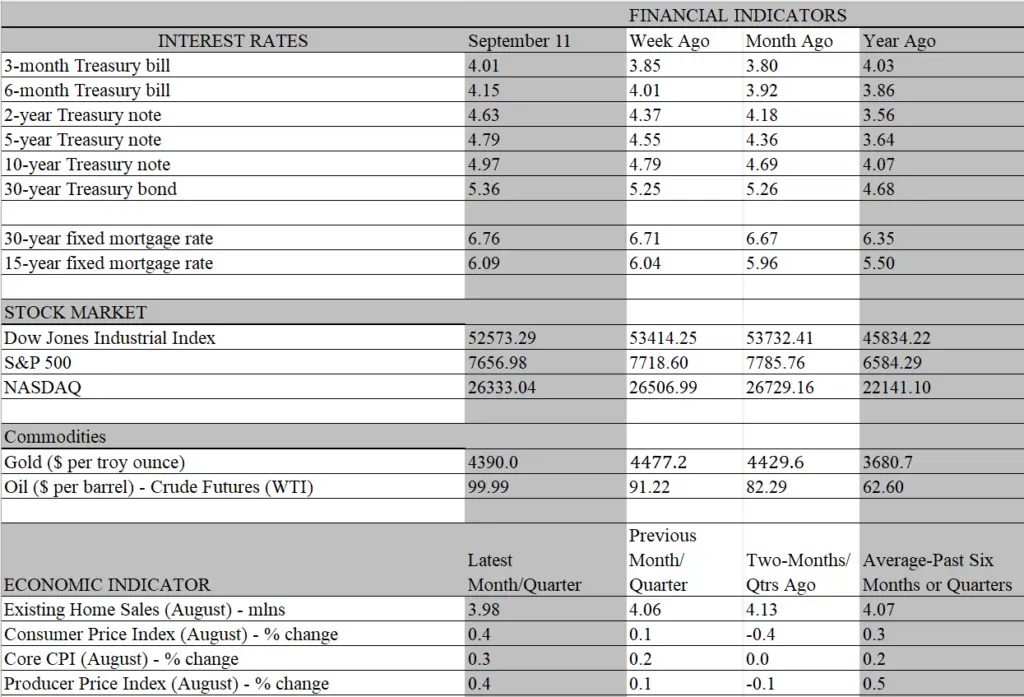
Inflation headlined the economic news this week and the slightly warmer than expected wholesale and consumer price reports for August nudged up the odds that the Fed would hike interest rates at its upcoming meeting next week. However, the financial markets barely reacted to the news, as stock prices recovered some of their earlier losses, and market yields held relatively steady; the bellwether 10-Year Treasury note held below 5 percent following weeks of climbing towards that psychologically sensitive level last seen in 2003. At best, inflation does not seem to be accelerating; at worst, it remains stubbornly above the Fed’s 2 percent target. With the economy continuing to chug along and the job market holding up, the hawks on the policy setting committee should remain vocal in support of a rate increase.
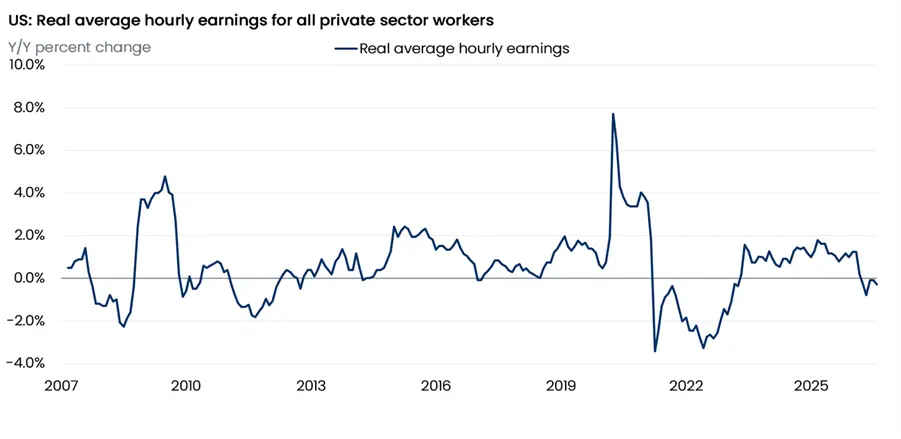
Importantly, the latest reading on inflation sustains a trend that is increasingly garnering headlines and may be fueling the downbeat sentiment revealed in household surveys. The 3.4 percent year-over-year increase in the CPI marks the fifth consecutive month that consumer prices have outpaced the annual increase in worker earnings. That’s the longest stretch of eroding purchasing power for workers since early 2023 and leaves real hourly earnings no higher than they were in May 2025. Clearly, the resilience of consumer spending this year has been bolstered more by copious tax refunds, the drawing down of savings and the wealth effect from a booming stock market than from worker paychecks.
The good news is that the labor market is not a source of inflationary pressure, providing the Fed with an off-ramp if it wants to avoid raising interest rates at its upcoming meeting. So far, the elevated headline CPI has not stoked an increase in inflation expectations. What’s more, the core CPI, which excludes volatile food and energy prices, continues to drift lower, hitting a year-over-year pace of 2.4 percent in August. That’s the closest to the Fed’s 2 percent target since March of 2021. We suspect that the Fed’s preferred inflation gauge, the PCE deflator, will show a more benign reading for August than the headline CPI when it is released later this month. But that report will not be available until after the Fed’s meeting.
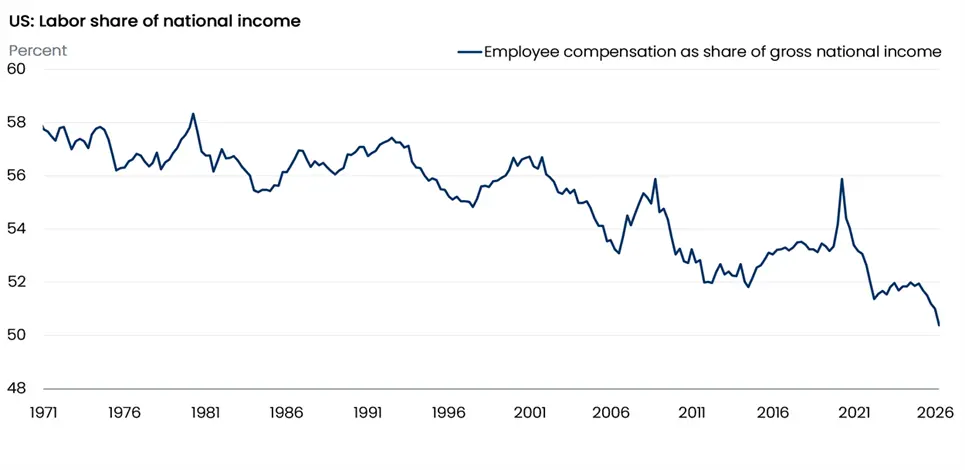
The bad news is that workers’ eroding purchasing power amid a growing economy dovetails with the yearslong trend in which labor’s share of national income is steadily shrinking. To be sure, labor has been gradually losing ground since the 1970s; but after a plunge during the 2008-2010 financial crisis its share of national income recovered strongly, thanks to an extended period of low inflation and solid wage growth. By the peak of the post GFC expansion, labor had recaptured all of the share lost since 2008. However, labor’s relative standing has taken an abrupt turn for the worse since the pandemic. Its share of national income plunged to a post- WWII low by the second quarter of this year and is poised to decline again in the current quarter
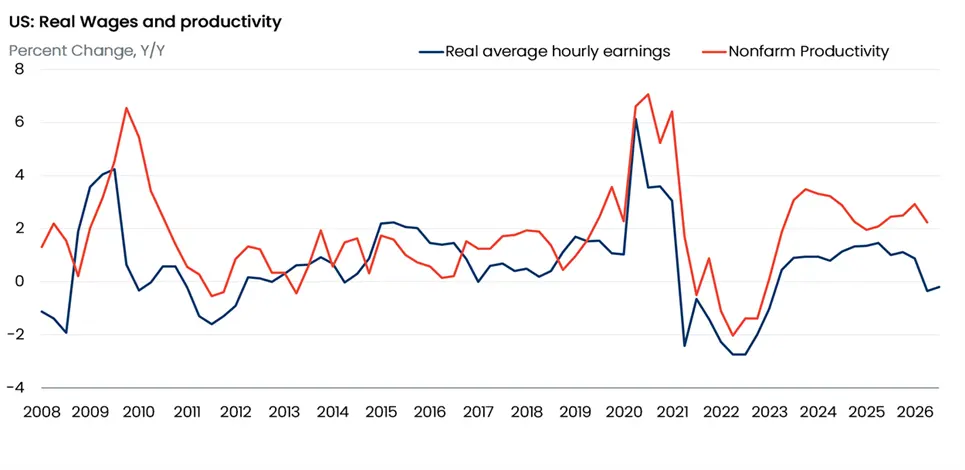
It’s important to note a big difference between the post-GFC and the post-pandemic expansions. For most of the former, labor and businesses shared about equally in the productivity improvement during the period. Hence, both real wages and profits grew, a goldilocks scenario in which the rising tide lifted all ships. But when real wages grow more slowly than productivity, labor’s share of national income falls. That’s precisely what’s been happening during the post pandemic recovery. Not only have wages lagged productivity growth, the gap has been widening as productivity continues to strengthen and real wages are declining. Making matters worse is that nominal wage growth is also slowing, as the annual increase in average hourly earnings slid to 3.1 percent in August, the weakest in more than five years.
By itself, a declining labor share of national income does not portend bad tidings for the economy. With corporations reaping more of the rewards from productivity gains, they are also acquiring the financial resources needed for investment spending and hiring. Both are very much in play this year even as spending on AI has become a critical force fueling growth and productivity. Indeed, the AI buildout is not only driving growth directly via investment spending, but indirectly as well by underpinning a strong stock market and the wealth effect that is supporting spending by more affluent households. However, those current pillars of strength also expose vulnerabilities that may haunt the economy down the road.
For one, the productivity gains seen in recent years are yet to have the inflation dampening effect they are supposed to deliver. Instead, the aggressive spending on data centers and tech-related inputs, i.e. computer chips and semiconductors, are proving to be more inflationary than disinflationary. That, in turn, may coax the Fed into more of a rate-hiking mode than otherwise. For another, the AI buildout itself is facing hurdles from the growing public backlash towards construction in many places. To the extent that this impairs investment spending, a major driver of the economy’s growth engine would be weakened. If that translates into a stock market correction, or worse, a meltdown, the wealth effect driving consumer spending would also collapse.
While non-trivial prospects, we don’t expect these events to bring down the economy in the foreseeable future. Yet it is hard to ignore warning signs linked to both the myriad external shocks as well as the waning influence of workers. The Mideast war shows no sign of easing, tensions over tariffs are heating up and policy uncertainty is poised to grow as the midterm elections approach. Meanwhile, the boost from tax refunds on consumer spending is unwinding, and household sentiment is sinking, as illustrated in the latest University of Michigan Survey. That mindset is not being uplifted by the ongoing slide in worker purchasing power.