
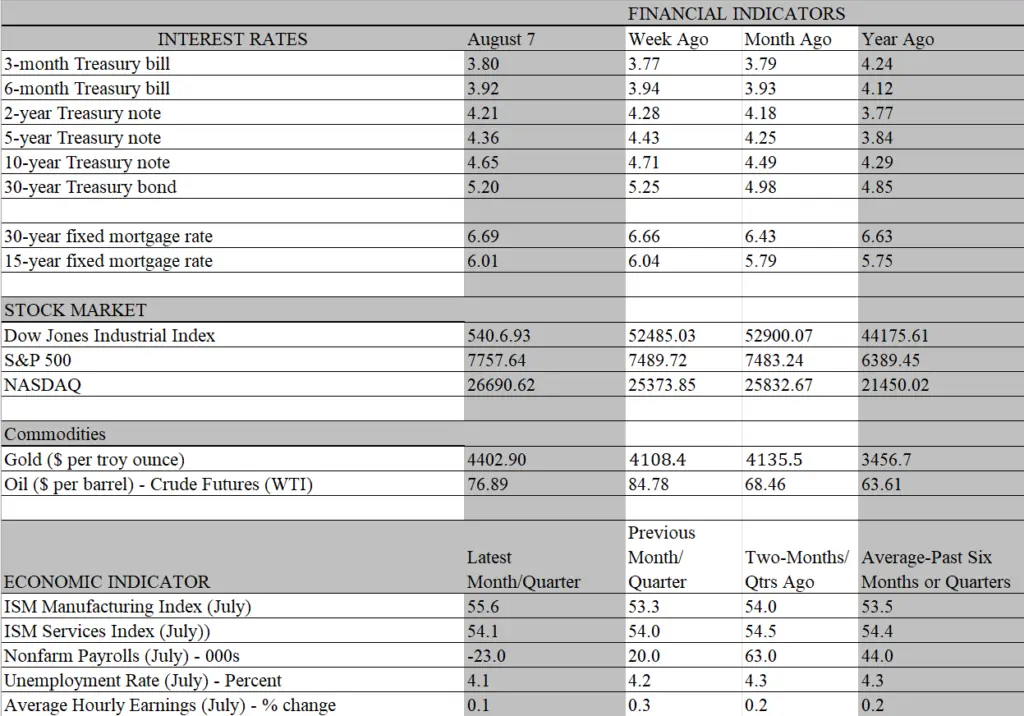
Friday’s all-important monthly jobs report highlighted the old maxim that occasionally resurfaces, namely that bad news on Main Street is good news on Wall Street. For some time, the focus among investors as well as the Federal Reserve was on inflation, which has been running above its 2 percent target for more than five years and showed little sign of getting there any time soon. With the economy performing well and, notably, a job market that outperformed expectations, the widespread belief was that the Fed’s next move would be to raise interest rates, perhaps as early as the September policy meeting. That prospect does not sit well with Wall Street, as higher rates punishes earnings and increases the incentive to move out of stocks into higher yielding bonds. Meanwhile, the underlying catalyst for higher rates, a resilient economy stoking healthy job growth, is good news on Main Street.
To be sure, no one likes inflation. But given the choice of losing a paycheck or paying more for groceries, most people would opt for having a job. That’s why Friday’s jobs report abruptly changed the narrative on Wall Street. Put simply, what had been a resilient labor market suddenly looks to be on much shakier ground. Job growth in July vanished, as the economy lost 23 thousand jobs during the month, a dramatic undershoot from the 80 thousand gain that was widely expected. What’s more, revised figures show that there were more than 100 thousand fewer jobs in May and June than previously estimated. Hence, over the past three months, job growth averaged 20 thousand a month, a big downward adjustment from the 111 thousand average gain estimated prior to the revisions through June.
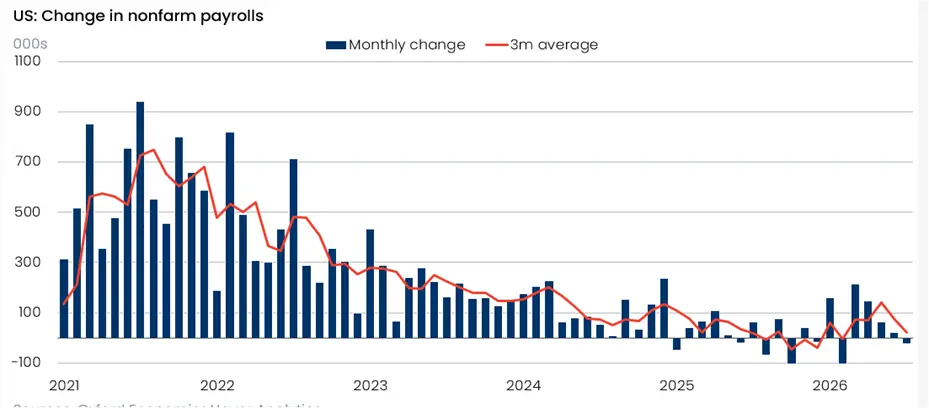
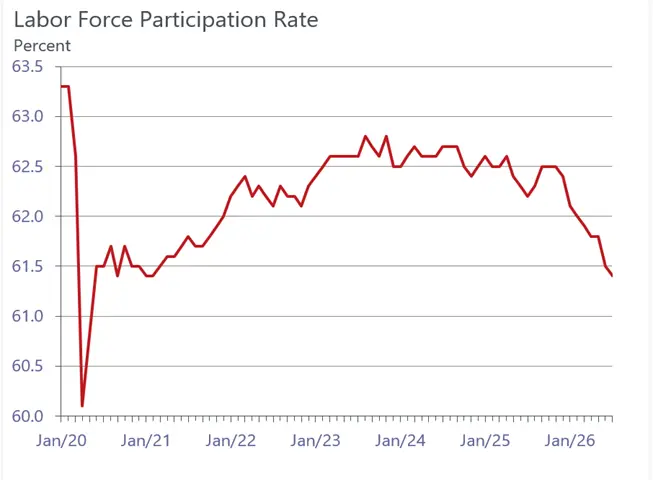
Unsurprisingly, Wall Street applauded the news, as stock prices rose and market yields fell, particularly on the 2-year note that is highly sensitive to Fed rate expectations. Following the report, traders quickly reassessed their thinking about the Fed’s next move, pricing in less than a 50 percent chance that a rate hike will occur at the September meeting. That’s despite the fact the companion headline stat – the unemployment rate – actually fell from 4.2 percent to 4.1 percent which, on the surface, indicates a tightening job market. But just as bad news is good news on Wall Street, the good news on unemployment is bad news on Main Street because the unemployment rate fell for the wrong reason. The unemployment rate – which is derived from a separate survey of households – fell because lots of people, nearly 300 thousand, dropped out of the labor force. The share of the working-age population participating in the workforce fell to 61.4 percent, the lowest since the pandemic. Prior to that, you would have to go back to the mid-1970s to find a lower participation rate.
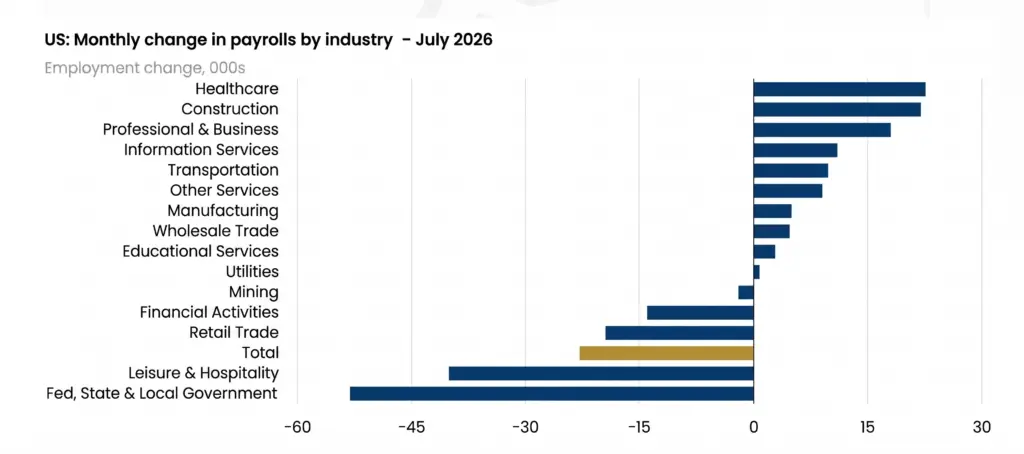
All that said, while these headline -grabbing numbers portray an abrupt shift in job conditions, we caution that it would be a mistake to read too much into a one month report. As can be seen in the July release, the monthly figures are very jumpy and subject to wide revisions. That caution particularly applies to a summer jobs report when the seasonal noise can be especially loud. For example, the slump in payrolls last month was heavily influenced by the loss of 50 thousand local government education jobs. We suspect that this is more of a seasonal quirk around the school calendar rather than massive layoffs of teachers and other personnel. Take out the government from the tabulation, and payrolls in the private sector actually increased in July, although by a still weaker than expected 30 thousand jobs.
The private sector may also have been impacted by special factors. For example, the World Cup may have played havoc with the leisure and hospitality industry, where jobs fell by 40 thousand. Lots of people stayed home, glued to their TVs instead of dining out or going to other events. Indeed, viewership shattered TV records in the U.S. attracting a huge audience of 66.4 million. Outside of football (the U.S. version) it was the largest American TV audience since the 1994 Olympics. Elsewhere, the biggest job driver in recent years, the healthcare industry, continued to lead the way in July, but even here payrolls grew by less than half the average increase over the previous four months.
Interestingly, one of the major job producers last month was the construction industry, which may seem paradoxical given the slumping housing market. Indeed, residential construction jobs, fell for the fourth consecutive month in July. But hardhats overall are in great demand thanks to the AI buildout, where overzealous spending on data centers requires a good deal of construction workers These workers are getting richly compensated. Over the past twelve months, average hourly earnings for construction workers grew by 4.4 percent, compared with 3.2 percent for all private sector workers. As we have pointed out before, however, it takes a lot of workers to build a data center, but only a few to run it. It is also important to realize that foreign-born workers account for a sizeable share of construction workers, and the massive outflow of immigrants due to government policy has reduced the supply of workers in this sector – creating a labor shortage that has helped push up wages.
But the overall workforce is not doing as well. As noted, average hourly earnings for all workers in the private sector increased by 3.2 percent over the past year, down from 3.4 percent in June and the weakest since the pandemic in May 2021; before that you would have to go back to 2018 to find a smaller increase. However, inflation then was running at around 2 percent whereas now it is north of 3 percent, so workers are falling behind in terms of purchasing power. As much as anything, this reflects the diminishing bargaining power of workers, something that would not be the case if labor conditions were tight.
Again, we do not want to push the panic button over a weak one-month jobs report, arguably the most important indicator describing the economy’s health. But the downward revision of previous months suggests that a trend may be forming that could well influence the Fed’s decision at the upcoming meeting in September. There will still be two more months of data on inflation and jobs before that meeting takes place so perceptions of the economy could easily shift again. Keep in mind that a 4.1 percent unemployment rate is still low, no matter how it is sliced and diced. True, job growth is trending slower, but whereas it used to require about 100 thousand more jobs each month to keep up with labor force growth – and keep the unemployment rate from rising – that breakeven rate is much lower now because of an ageing population that is generating a wave of retiring boomers, and an anti-immigration policy that is removing a big slice of labor supply. So, a 20-30 thousand increase in job growth should be enough to keep the unemployment rate stable. Looking ahead, all eyes will turn to the inflation data next week, which will influence the odds of a Fed rate move in September. Last month, softer-than-expected price statistics were enough to keep most Fed officials in favor of standing pat. The upcoming data will test the Fed’s patience. Stay tuned.