No one thought the Mideast conflict would go gently into the good night, but the ebb and flow of hostilities took a menacing turn this week. Not only has the tit-for-tat bombing between the U.S. and Iran ramped up another notch, it was reinforced by the Houthis who are now blockading the Red Sea and choking off another big shipping zone from the global trade in oil. Unsurprisingly, the price of oil has resumed its upward climb, skyrocketing to over $100 a barrel this week. That’s up 20 percent since hostilities flared up again this week and not far from the $112 peak hit after the initial round of bombing roiled the oil market early this spring. Also unsurprisingly, prices at the pump are following suit, rising above $4 a gallon again, up by about 40 cents over the past few weeks. That’s sure to pinch the pocketbook of motorists and resonate through the chain of consumer goods whose prices are influenced by the cost and availability of oil.
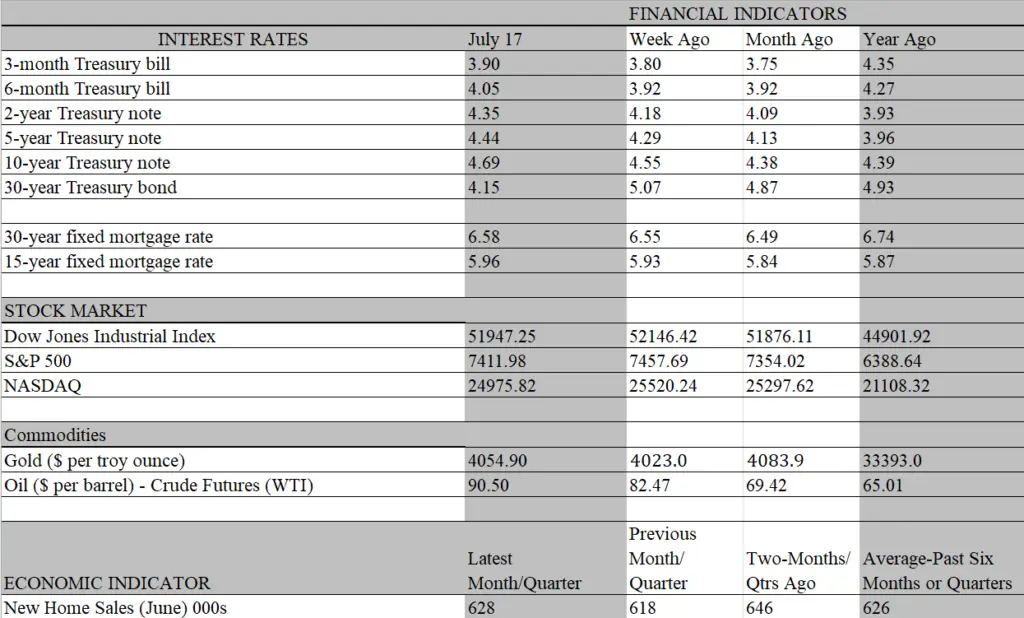
At this point, it is almost impossible to predict where oil prices will settle as the war is becoming ever more unpredictable, thanks in part to its broadening scope involving the Houthis. That said, traders are fairly optimistic that a resolution, however tenuous, will be achieved before catastrophe hits, as the futures price of crude has risen less than half as much as the current price. Time will tell if events verify that optimism, but the financial markets are clearly not in a waiting mode. Stock prices took another hit this week, and bond yields climbed to the highest level since early last year. The latest turn of events in the oil markets has amplified inflation expectations among investors who also upped their bets that the Fed will be forced to raise interest rates this year.
We still believe the Fed will be on an extended hold regarding rates but is likely to focus more on the inflation side of its dual mandate than worrying about labor conditions. Policymakers are set to meet this coming week, and the markets are giving less than 40 percent odds that a rate hike will be taken at the meeting. However, only a week ago, following the very benign consumer price report for June, those odds were closer to 10 percent. Inflation fears have clearly escalated and are the main catalyst behind the climb in bond yields. Ironically, the very rise in market yields is doing some of the work for the Fed, giving it cover to keep its policy rate unchanged at the upcoming meeting.
We suspect that the upside risk of a Fed rate hike this year will remain intact until there is more evidence that labor conditions are deteriorating. So far, incoming evidence suggests just the opposite. True, job growth in June was slower than expected, but strong enough to keep up with the increase in labor supply and leave the unemployment rate at a historically low level of just over 4 percent. The latest weekly data on first time applications for unemployment benefits is a telling sign that labor conditions remain tight. Such filings fell to the lowest level since 1969 in the latest week. Keep in mind that in 1969, the labor force was much smaller than it is now, so the low level of filings represents an even smaller share of the workforce than it was then.
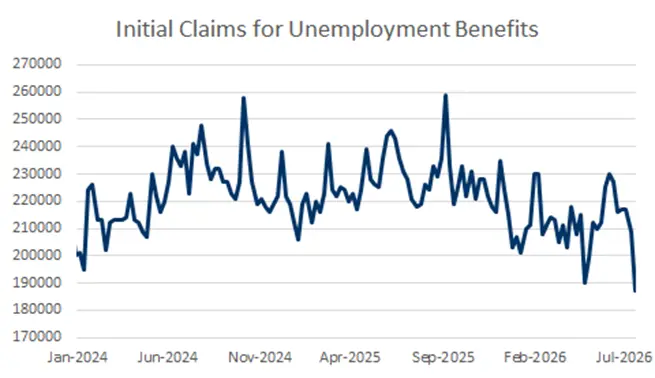
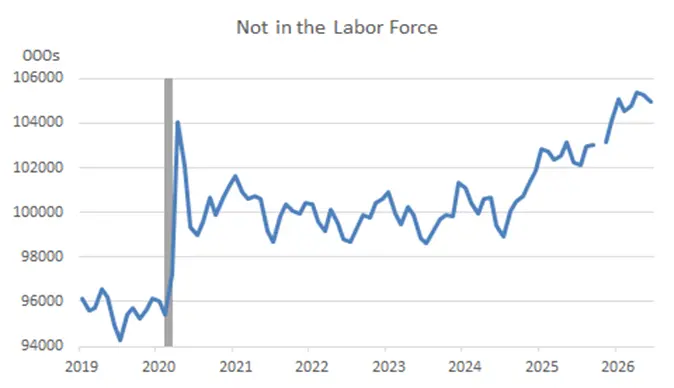
No doubt, the weekly figures are hugely volatile, and we suspect that the drop in the latest week is more noise than substance. The seasonal factors that statisticians use to adjust raw data for seasonality do not always capture major events that recur at varying times. This week’s numbers, for example, may not have adjusted for timing shifts of the usual auto plant shutdowns that take place over the summer as automakers retool for the new models. The weekly volatility may also reflect New York school system workers who are eligible to claim benefits at the beginning of summer, which caused a one-off bounce and then a drop back in claims. Finally, for reasons that are still unclear, workers have been leaving the labor force in droves and stopped looking for work. The surge over the past year is far greater than would be expected from an aging population that is generating a wave of retirements. Nor is immigration policies pushing up the numbers, as foreign born workers are not dropping out at a faster pace than normal.
Simply put, the job market is not showing visible cracks that would move the needle for the
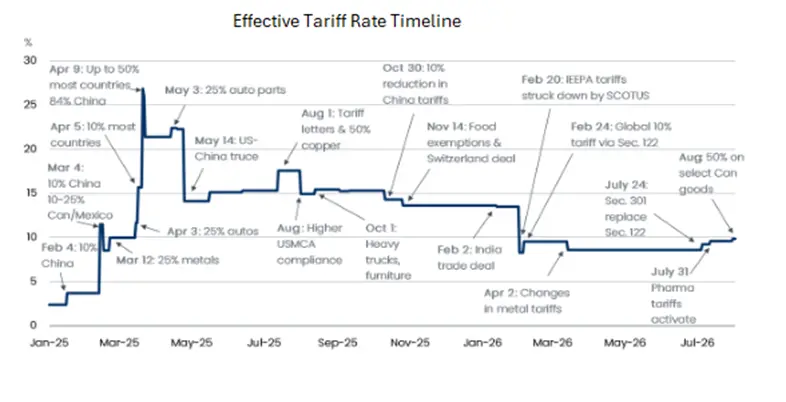
Fed to change its newfound hawkish bias. Job growth is slowing, but companies are holding on to workers, supporting the low hire, low fire narrative in effect for most of the past year. Fortuitously, wage growth has been contained, indicating that strengthening worker bargaining power is not a source of inflationary pressures. But inflation fears are being stoked once again by an old nemesis that returned to the headlines this week – tariffs. The temporary round of levies that President Trump imposed to replace earlier tariffs ruled illegal by the Supreme Court is set to expire this week. The wave of new measures, including the new Section 301 tariffs on 80 economies that range from 10% to 12.5%, is mostly a straight replacement for the expiring Section 122 tariffs.
Hence, on the surface the new measures should not be a source of renewed inflation as the increased costs to importers merely offset the expiring ones. Importantly, many analysts believe that this round should pass muster with SCOTUS, as it is based on more realistic legal precedent than the National Emergency Act that underpinned the earlier round voided by the Court. What’s more, the inflationary impact of previous tariffs was much less than expected as businesses absorbed most of the increased costs rather than pass them on to consumers. There may still be a delayed impact from the new measures, but for the most part we believe that tariffs are one source that can be viewed in the rear view mirror for inflation.
Indeed, after all is said and done, the effective tariff rate – and revenues raised by the Treasury – is not much different than when the liberation day tariffs were imposed early last year. However, there are upside risks as the president can stack additional tariffs on to the new legal framework, assuming it holds up in the courts. That prospect already has substance, as Trump announced 50 percent tariffs on a range of goods from Canada starting next month. Interestingly, the financial markets recoiled at the tariff blitz last year, fearing its inflationary impact. But the $264 billion in revenues raised from those tariffs helped finance the government’s burgeoning budget deficits. The bond market would likely respond negatively now if those revenues were to vanish due to court rulings, as the huge mountain of government debt would climb further without that financing. In time-honored fashion, more supply (debt) facing reduced demand (tariff revenues) point to higher prices (yields).