Just days before Halloween, the Fed decided not to jolt the markets with a scary rate hike. That said, two policy goblins out of 12 voted for an increase, hoping to drive a stake through the heart of inflation, which even the head decision maker agrees remains overly alive and well. Since a rate hike was widely expected to remain in the crypt, the markets took the decision calmly. The hawks, however, are circling overhead, and all signs point to a belated rate hike at the December meeting, a timetable that aligns with our expectation.
At the post-meeting press conference, Fed Chair Kevin Warsh, readily admitted that inflation was still too hot, and the summary press statement upgraded the economy’s performance to “strong” from “solid’ at the previous meeting. Most Fed officials still believe there is little urgency to act now, but that more muscular characterization clearly supports the case for an increase unless conditions weaken dramatically over the next six weeks and inflation shows visible signs of cooling. However, the economy is heading into the fourth quarter with considerable momentum and inflation continues to run unacceptably hot.
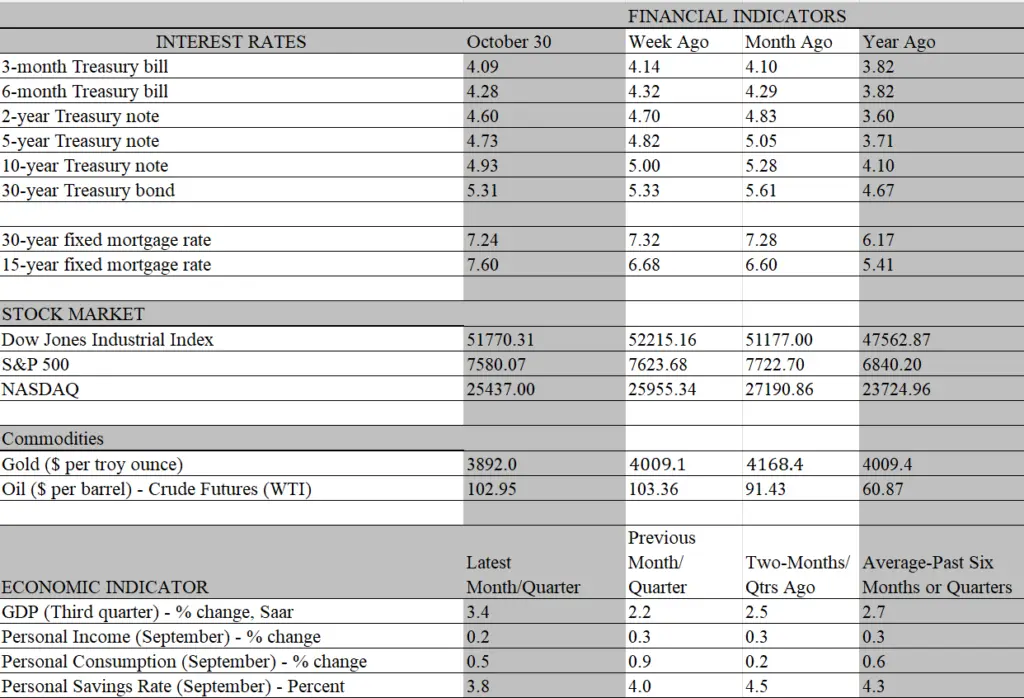
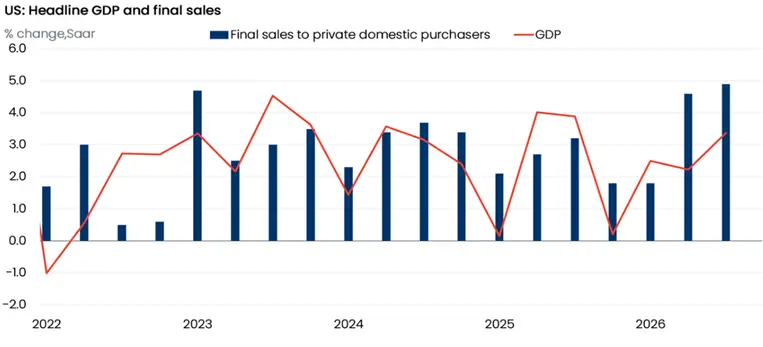
A raft of data following the Fed’s meeting confirms that perception. Real GDP advanced at a lofty 3.4 percent annual rate in the third quarter, a full percentage point above the first half pace and modestly stronger than the consensus forecast. But the headline understates the core strength of the economy, as final sales to private domestic purchasers – consumers and businesses – surged by 4.9 percent, the strongest increase in more than five years. It was also the second consecutive quarter that the core components of GDP outpaced the growth in overall GDP. As usual, personal consumption provided the biggest boost, increasing 3.8 percent and contributing 2.5 percentage points to the 3.4 percent GDP increase. Business fixed investment – led by the AI-related purchases – staged a heftier 12.8 percent increase but contributed a lesser 1.8 percentage point to growth because of its smaller size.
The biggest drag came from a widening trade deficit, highlighted by an eye-opening 19.7 percent surge in imports. But that increase primarily reflects heightened domestic demand for computer related parts made overseas to feed the AI buildout in the U.S. and should be seen as more strength than weakness. The only real soft spot in the economy’s performance last quarter was in residential construction, which fell by 3.3 percent. Residential outlays have now declined in six of the past seven quarters, and conditions in the housing sector are not expected to turn favorable any time soon. Mortgage rates have soared above 7 percent and home prices are out of reach for first-time buyers. What’s more, homebuilders are facing numerous obstacles, including tariff-related increases in the cost of materials and labor shortages owing to tighter immigration policies as well as the lure of higher wages offered in the nonresidential sector, where the competition for workers to build data centers is fierce.
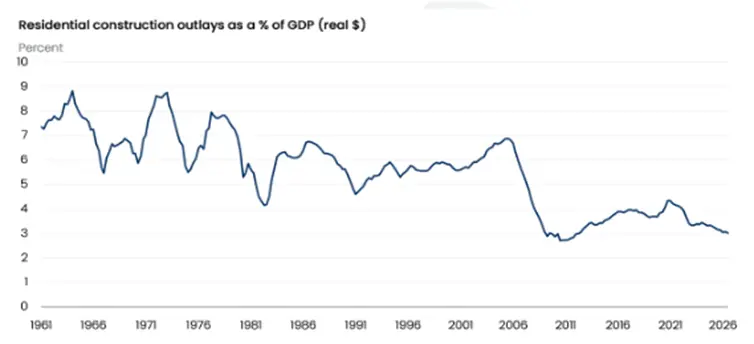
The good news for the economy is that the ongoing weakness in residential construction has also diminished its influence on the broader economy and, hence, will have less of a growth-eroding impact than in the past. With the third quarter slump, residential outlays fell to 3.0 percent of GDP, a share that has only been lower during the years surrounding the 2008-2009 housing collapse and financial crisis. However, housing is one of the most interest-rate sensitive sectors of the economy and historically has been a leading indicator of recessions following a Fed tightening cycle. It’s diminished size may mean that the Fed will have to step on the brakes harder to squeeze as much juice out of the economy as it has in the past.
That assumes, of course, that the rapidly growing AI-related sectors are less impacted by higher rates than housing. Until recently, that has been the case, but the AI spending boom is now outpacing revenue growth for many companies in this space, forcing them to raise hundreds of billions of dollars in the capital markets. So far, investors have absorbed the supply without demanding much higher compensation. But skepticism over whether future returns will justify the spending spree is growing, which could diminish investor appetite for these bonds. That skepticism has clearly found its way into the stock market, where even the hyperscalers have seen their issues take a big hit in recent weeks. Should fears escalate that a revenue shortfall would impede these borrowers from servicing their debt, the negative impact of higher borrowing costs linked to Fed rate hikes would deepen and take some stream out of the AI buildout, if not worse.
Importantly, the market setback led by AI-related stocks is spurring a flight to safety that is pulling Treasury yields down, making it more likely that the Fed will raise rates sooner rather than later. Fed Chair Warsh has repeatedly noted that financial conditions are not overly tight, implying that an increase in Treasury yields would have done some of the heavy lifting to cool the economy. The current trend in the bond market weakens that case, even as inflation pressure continues to build. The main catalyst is the war-induced surge in energy prices, which remains elevated and is creeping higher as the midterm election approaches. It is unclear if President Trump will follow through on his threat to resume bombing in Iran after the elections, but the prospect of another leg up in energy prices should not be dismissed.
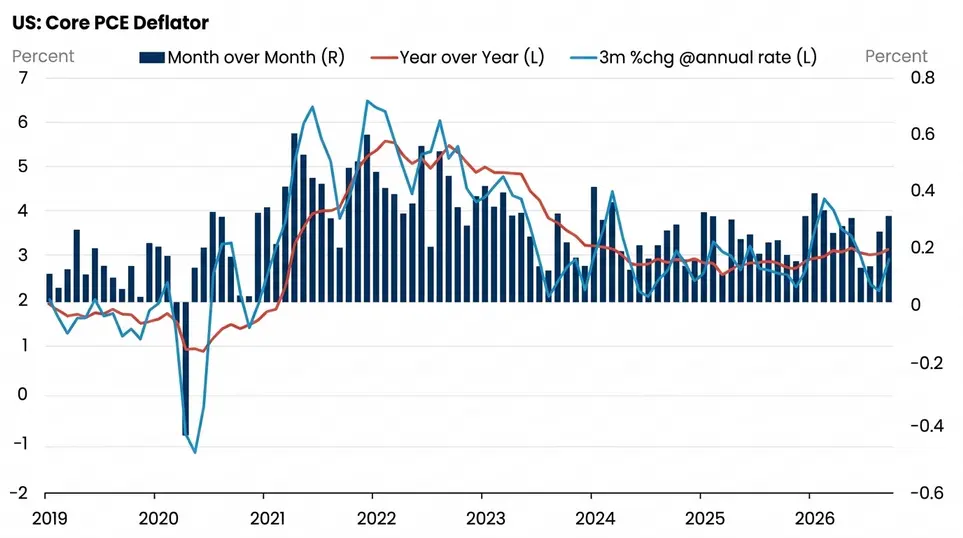
As it is, the surge in energy prices is bleeding into the broader inflation picture, raising the odds that the Fed will hike rates again in December even if the war ends before then. It will take time for the knock-on effects of the war to unwind even as the lagged effects continue to feed through into transportation costs that drive up prices on goods, including groceries, yet to be delivered. The core personal consumption deflator, the inflation gauge closely monitored by the Fed, delivered more heat than relief in September, increasing 0.3 percent for the second consecutive month and reversing the encouraging slowdown over the summer. After slipping to 2.2 percent in August, the core deflator shot up to a three-month average rate of 2.9 percent in September and is running at 3.1 percent over the past year, well above the Fed’s 2 percent target. The longer the Fed delays a rate hike, the greater the risk that it falls behind the inflation curve; market inflation expectations are already creeping higher.