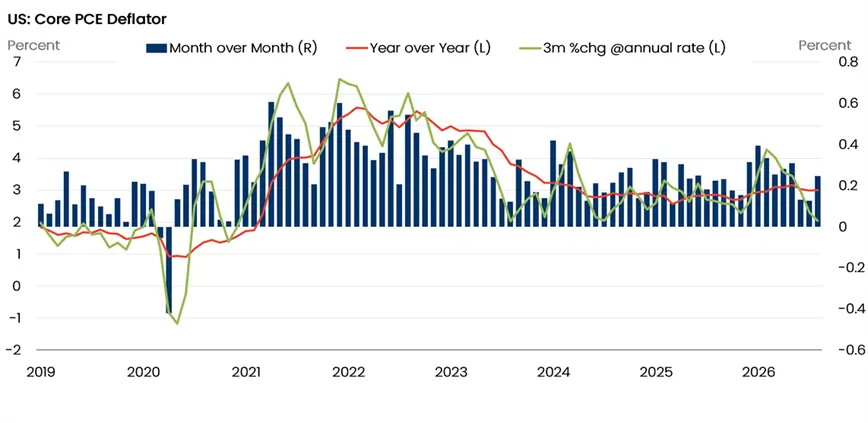
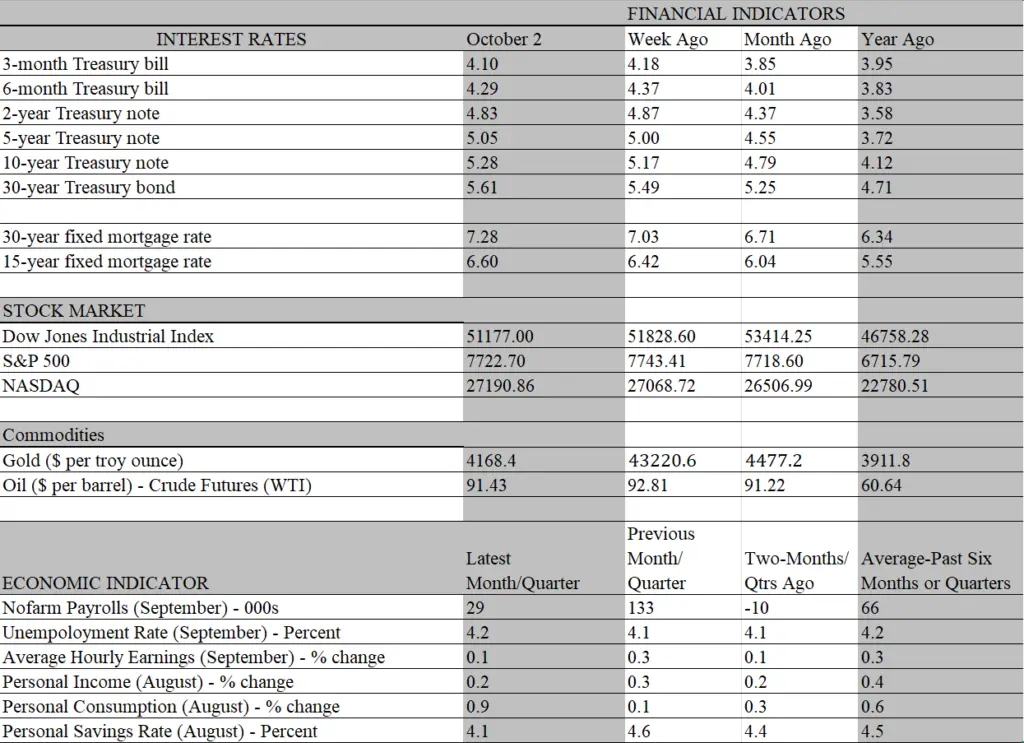
The proverbial dog days of summer were anything but. As new and revised data are coming in, the third quarter is morphing from languid to downright vigorous following a more energetic spring than previously thought. The cooler-than-expected jobs report for September takes some heat off the Fed to hike rates at the October meeting. But the job market was never the catalyst for the Fed’s more hawkish stance, as it had little to do with the elevated inflation that needed to be addressed. Fortunately, incoming news on the price front together with revised estimates portray a cooler inflation landscape that earlier estimated.
Indeed, the rear-view mirror provided as much fireworks as incoming data, as the revisions shed more light on how bifurcated the economy has become. They also provide more evidence as to why households are so downbeat, while the macro data depicts so much strength. The starkest example of this can be seen in the upwardly revised personal income data over the past four years. More important than the magnitude of the revision is the component that drove it higher. It was not labor compensation, which was essentially unchanged in the revised tally. Instead, it turns out that affluent households who own most financial assets enjoyed a significant boost in the income received from those assets, most notably in the form of interest and dividends.
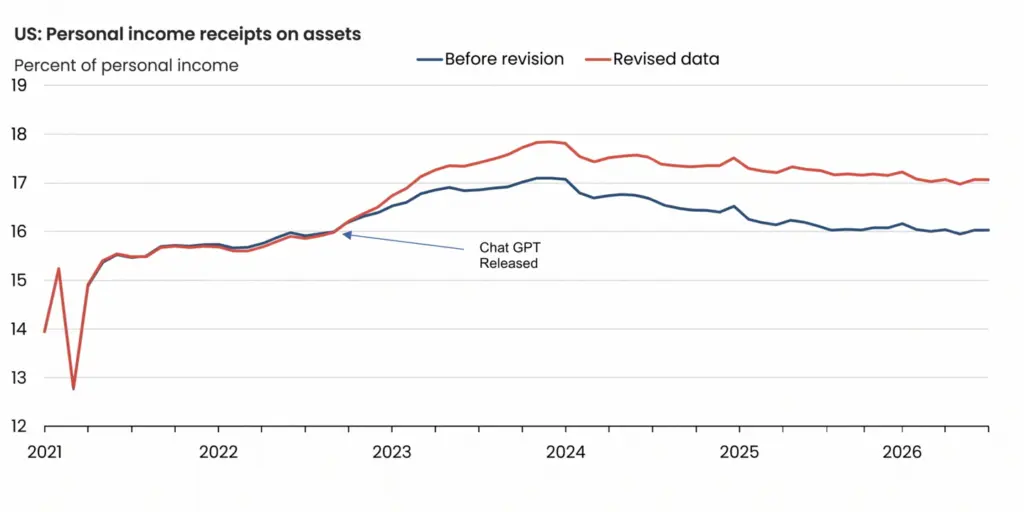
The lingering dark side of the income trend is that inflation continues to outpace worker earnings. The latest jobs report for September showed that average hourly earnings increased by a slim 3.0 percent over the past year, the slowest annual increase since 2021. The consumer price report is due out on October 14, but it is highly likely to show another faster increase in the index than 3.0 percent, which would mark the sixth consecutive month of declining real wages. Likewise, data on income generated from financial assets will not be available until later in October. But given the surge in yields throughout the maturity spectrum that took place in September, it is logical to assume that financial assets delivered another muscular income stream for investors during the month.
Simply put, even as inflation and climbing borrowing costs are taking an increasing toll on wage-earners in general and lower-income households in particular, the wealth effect continues to do the heavy lifting for consumers and is primarily responsible for the outsize spending increase recorded in August. The 0.9 surge in personal consumption matched the strongest monthly increase since December 2024. Unsurprisingly, the biggest contribution to the increase came from big-ticket purchases – motor vehicles and other durable goods. Nor was the spending increase entirely price-driven, as real spending also increased by a sturdy 0.6 percent In August. However, inflation did wipe out the increase in disposable income, which was unchanged during the month.
Hence, consumers had to dip into savings again to support purchases, lowering the savings rate from 4.6 to 4.1 percent, the lowest since November 2022. The good news is that the income revisions lifted the rate by a full 1.6 percentage points from the under 3 percent previously estimated, providing more of a savings cushion than thought. That said, since virtually all of the upward income revision came from interest and dividends on financial assets, we suspect that most of the increased savings accrued to wealthier households. Given their smaller propensity to consume out of income, that translates into a smaller bang for the spending buck than would be the case if the income increase were more evenly distributed down the income ladder.
The constraints on household purchasing power from inflation, low savings and high borrowing costs indicate that consumer spending will weaken from the robust pace being tracked in the current quarter. However, the growth engine will not run out of fuel as long as the job market remains on a solid footing. The slowdown in payroll growth in September was more abrupt than expected, but the 29 thousand increase in September (versus an expected 90 thousand) combined with the downwardly revised increases in July and August, still left job creation running at a three-month average pace of 51 thousand. That is close to the breakeven rate needed to keep the unemployment rate from rising.
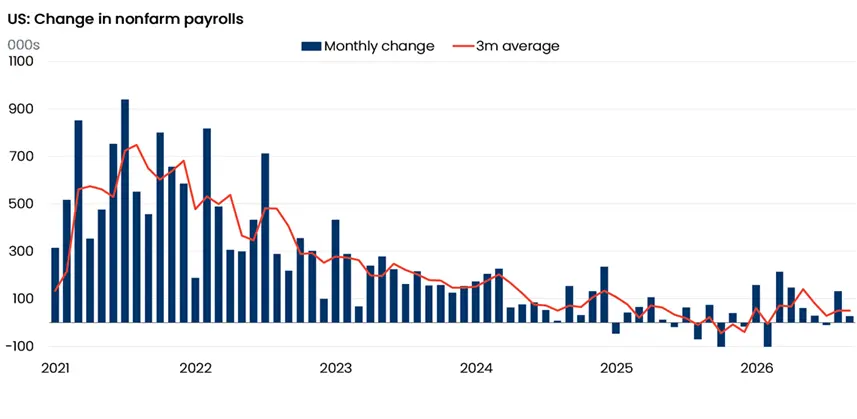
The small increase in the jobless rate last month from 4.1 to 4.2 percent reflected a big jump in the labor force that exceeded the increase in employment. That could be a promising sign as more workers on the sidelines perceive that employment opportunities are becoming more favorable and are encouraged to resume their job search. Both the number of new and reentrants to the labor force increased significantly last month, with reentrants the highest in eight months. The labor force participation rate bumped up to 61.8 percent from a cycle low of 61.4 percent two months ago. Despite the slim rise in September, the unemployment rate is still near historic lows. And while payroll growth is slowing, the increase so far this year is more than double the increase over the first nine months of last year.
All told, the job market is not a source of concern threatening either growth or inflation prospects. Even as consumer spending loses some momentum in coming quarters, the AI build-out continues to fill the void, injecting hundreds of billions of investment dollars into the economy. Meanwhile, the AI boom is also juicing the stock market which, in turn, is burnishing the portfolios – and spending power – of wealthy households. It is fair to say, however, that if one falters, so too will the other. From our lens, that remains the biggest risk to the outlook.
However, another risk would surface if the Fed goes too far in raising rates to arrest a stubbornly elevated inflation caused by supply shocks over which it has little control. The weaker-than-expected payroll growth following some dovish comments from Fed officials this week have led the financial markets to reprice the odds of a rate hike in October, lowering them to well under 50 percent. No doubt, revised data that also lowered the inflation rate measured by the Fed’s preferred inflation gauge, the personal consumption deflator, also lowered the urgency to raise rates. We don’t think an October hike has been taken off the table but note that the downward revision to the PCE deflator means that the quarter-point increase in the nominal federal funds rate taken in September now has a bigger bite in real terms. Indeed, with the core PCE deflator running at an annual rate of 2 percent over the past three months, the current 3.75 – 4.00 percent federal funds range looks less accommodating than earlier perceived by Fed officials.