
While almost unthinkable earlier this year, the Fed’s first rate hike in three years this week had been telegraphed well in advance, first by Chair Kevin Warsh’s hawkish Jackson Hole speech in August and afterwards by his repeated affirmation that getting inflation under control was a top priority. That commitment was in full display at this week’s policy meeting, with no member of the FOMC dissenting from the decision and 16 of 19 officials predicting at least one more increase before the end of the year. Warsh did not offer a prediction in accordance with his reluctance to provide forward guidance; but his comments at the post-meeting press conference made his preference loud and clear.
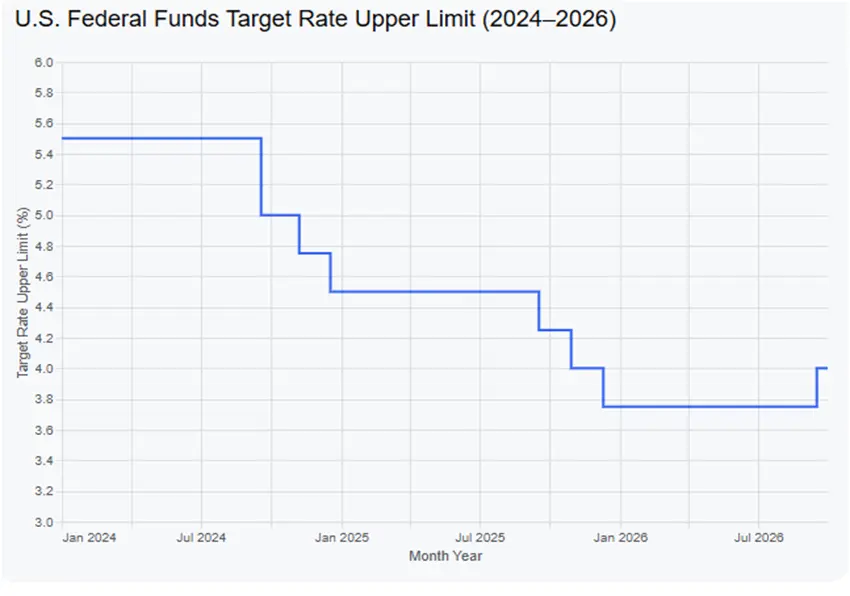
The financial markets are pricing in at least three more rate hikes by the middle of next year, which would erase the cuts taken in 2025 when inflation looked to be on a glide path towards the Fed’s 2 percent target. Then, the major inflation catalyst was the tariff blitz launched in April, which the Fed viewed as a transitory supply shock that would soon fade even as job growth was slowing while the unemployment rate rose from 4.0 percent to 4.5 percent over the course of the year. The central bank, then helmed by Jerome Powell, clearly saw more downside risk to the labor market than upside risk to inflation. The balance of risks has reversed since Warsh took over, underpinned by a seismic shift in perceptions among many officials on the policy-setting committee.
It’s highly unlikely that this is a “one and done” increase that some believe is appropriate because of the unstable economic environment and unpredictable forces that are having an outsize influence on conditions. There is some merit to the strategy of waiting until a clearer picture of how things play out comes into focus. But except for one occasion in 1997, the Fed has never put the brakes on a rate-hiking cycle after one increase and probably won’t this time either. Recall that the then Fed Chair Greenspan thought a corrective rate hike was needed to cool off what he feared was growing “irrational exuberance” in the stock market, fostering an asset bubble that could burst and destabilize the banking system. Inflation was actually low and quite stable at the time, and the rate hike, which never defused the targeted exuberance, was rescinded the following year. It took three more years for the dot.com bubble to finally burst and lead the economy into a mild recession.
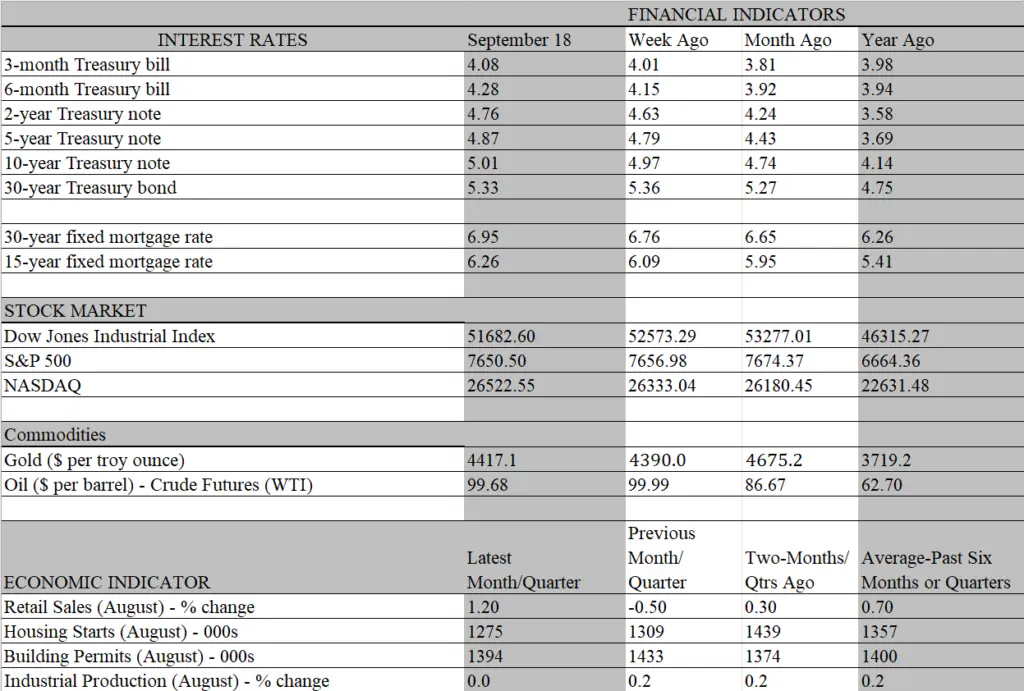
While many view the stock market as overvalued now, the rationale for a rate hike this time is grounded in economic fundamentals as well as ongoing external shocks that are buffeting the economic landscape. Regarding the latter, tariff uncertainty has not been vanquished as the administration continues to use tariffs to achieve foreign policy objectives as well as a revenue raising vehicle. The US-Iran war shows no sign of ending, sustaining upward pressure on oil prices that have topped $100/barrel and are bleeding into prices of other goods and services. That is stoking near term inflationary expectations among households and clogging the gears of the disinflation process.
The rate hikes won’t defuse these external shocks, but they will dampen financial market concerns over the Fed’s inflation-fighting credibility. Importantly, the Fed may have taken a more patient stance – as it mistakenly did in 2022 in response to inflation-induced supply shocks—if the economy were struggling. That is clearly not the case now. The labor market is holding up well, keeping the unemployment rate at near historical lows, and the private sector is adding more jobs than expected in recent months. Wage growth is slowing and inflation is taking an ever-bigger bite out of paychecks, fueling the downbeat sentiment among households and aggravating the budget squeeze of low-income consumers. But overall consumer demand remains resilient, as affluent households are more than offsetting any pullback by the lower income cohort.
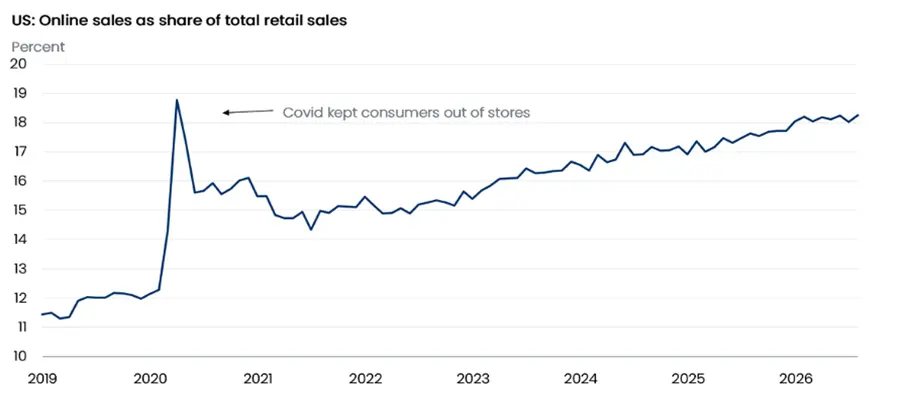
That’s reflected in the solid retail sales report for August released this week, which showed a significantly stronger increase in sales than expected. The 1.2 percent advance was, as expected, boosted by the price-driven surge in sales at service stations. But higher gas prices did not deter spending elsewhere. Excluding service stations, sales still rose by a hefty 1.1 percent, matching the strongest monthly gain since March of last year. Another major boost came from an earlier Prime Day sale by Amazon, prompting a swath of promotions by other online retailers. The influence of e-commerce on total sales continues to grow as elevated inflation spurs consumer to search for competitive prices, which are more transparent on the Internet. But except for a dip in building material sales, reflecting the languishing housing market, all major retail categories saw sales increase last month.
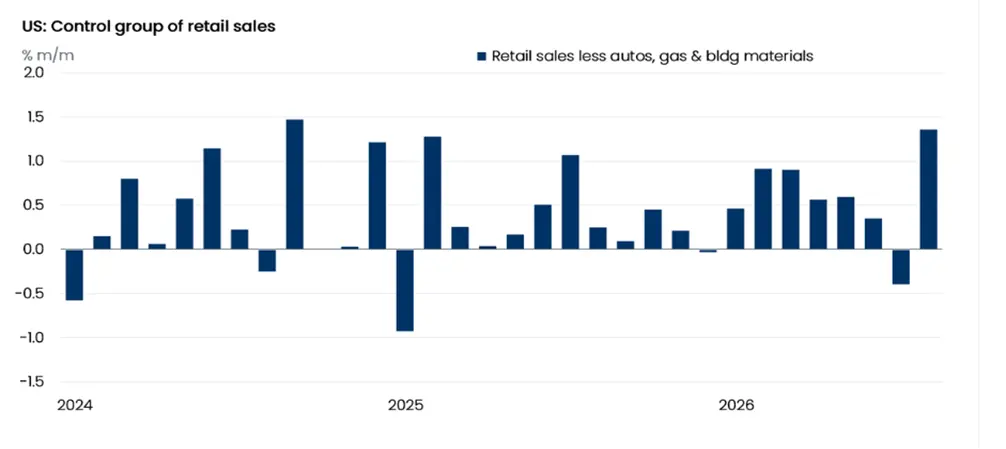
Consumers are the main engine of growth, and they are expected to make another solid contribution to the economy’s third quarter performance. The control group of retail sales, which feeds into the personal consumption tabulation in the GDP accounts, staged the strongest increase in two years, advancing by a hefty 1.4 percent. We expect that to translate into a 0.4 percent inflation-adjusted increase in personal consumption expenditures, putting real consumer spending on track for a sturdy 2.8 percent growth rate for the quarter. Together with ongoing support from AI-related investment, we expect GDP to grow by roundly 4 percent during the period. That would be more than double the increase over the first half of the year, and the strongest quarterly increase in three years
The Federal Reserve does not believe that financial conditions are hampering economic growth, and a rate hike might do more good than harm by reinforcing the central bank’s inflation-fighting credibility. Indeed, Fed Chair Warsh indicated that more hikes are on the way, noting that the latest quarter-point increase in the federal funds rate removes “a small dose of accommodation” from the system. We agree with that assessment and expect the Fed to make another move in December before going on an extended pause. The economy may be holding up well and able to withstand two rate hikes. But it is not overheating, and we expect inflation to resume declining next year, assuming the external shocks fade. Housing, the most interest-rate sensitive sector of the economy, is already reeling from mortgage rates approaching 7 percent, and higher borrowing costs on credit cards and auto loans are amplifying the affordability crises among low-income consumers. The downside risks to the economy would increase if higher rates stifle AI-related borrowing and investment, igniting a market correction that would also dilute the wealth effect driving consumer spending.